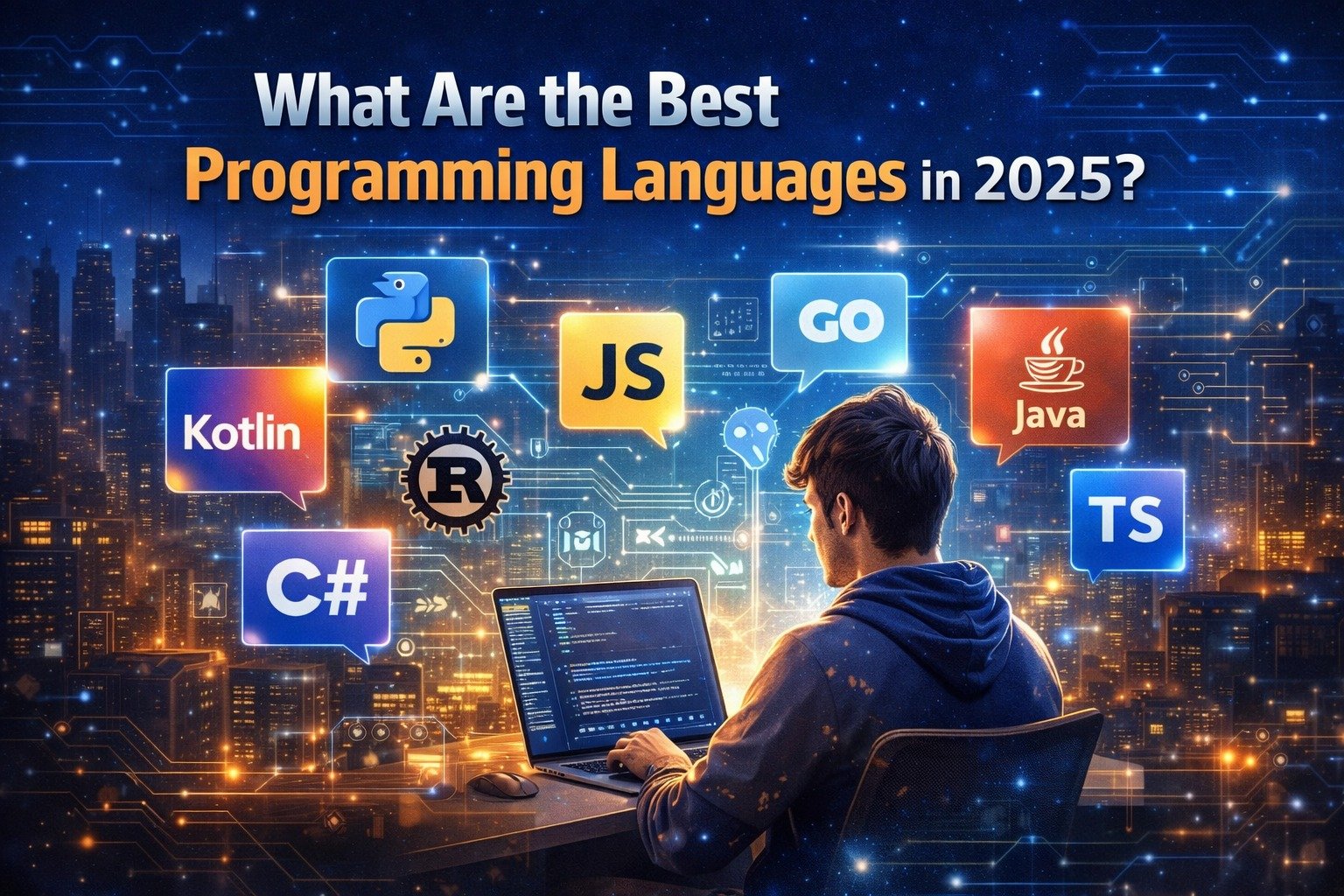
Discover the best programming languages in 2025 for developers, beginners, and tech enthusiasts. Learn which languages are trending, in demand, and ideal for web, mobile, AI, and data science projects.
The tech landscape is evolving faster than ever, and staying up-to-date with programming languages is crucial for developers, tech enthusiasts, and businesses alike. As we step into 2025, certain languages are gaining immense popularity due to their versatility, performance, and application in emerging technologies like AI, blockchain, and cloud computing. This article explores the best programming languages in 2025, why they matter, and which ones you should consider learning.
1. Python
Python continues to dominate the programming world in 2025. Its simplicity, readability, and versatility make it ideal for both beginners and experienced developers. Python is widely used in:
- Data Science & Machine Learning: Libraries like TensorFlow, PyTorch, and Pandas make Python the go-to language for AI and analytics.
- Web Development: Frameworks like Django and Flask simplify backend development.
- Automation & Scripting: Python scripts can automate repetitive tasks efficiently.
Python’s growing community and extensive support make it a top choice for long-term career growth.
2. JavaScript
JavaScript remains indispensable for web development. In 2025, its ecosystem continues to expand with modern frameworks and libraries, including:
- React.js & Angular: For building interactive and scalable web applications.
- Node.js: Enables server-side programming using JavaScript.
- Vue.js: Lightweight framework for dynamic user interfaces.
With the rise of full-stack development, mastering JavaScript opens doors to diverse web and mobile app projects.
3. Rust
Rust has become a favorite for system-level programming and performance-critical applications. It’s known for memory safety without compromising speed, making it ideal for:
- Blockchain Development: Used in platforms like Solana.
- System Programming: Operating systems, file systems, and embedded devices.
- WebAssembly: Running high-performance code in browsers.
Rust’s popularity is surging due to its reliability, safety, and modern syntax.
4. Go (Golang)
Go, developed by Google, is praised for its efficiency, simplicity, and concurrency support. In 2025, Go is highly sought after for:
- Cloud Services: Popular in Kubernetes and Docker ecosystem.
- Backend Development: Building high-performance servers and APIs.
- Scalable Applications: Handles multiple tasks concurrently with ease.
Go’s simplicity and speed make it a top choice for enterprise-level projects and microservices architecture.
5. TypeScript
TypeScript, a superset of JavaScript, is gaining massive traction among developers. It provides type safety, reducing bugs in large-scale applications. Key benefits include:
- Better Code Management: Ideal for teams working on complex projects.
- Integration with JavaScript Frameworks: Works seamlessly with Angular, React, and Vue.
- Enhanced Developer Experience: Improves maintainability and scalability.
In 2025, TypeScript is essential for modern web development.
6. Kotlin
Kotlin has become the preferred language for Android development, replacing Java in many scenarios. Its advantages include:
- Interoperability with Java: Allows smooth transition from existing Java codebases.
- Concise Syntax: Reduces boilerplate code significantly.
- Multiplatform Development: Kotlin Multiplatform enables cross-platform apps.
With Android continuing to dominate the mobile market, Kotlin remains a strategic choice for mobile developers.
7. Swift
Swift, developed by Apple, remains the cornerstone for iOS and macOS app development. Swift is:
- Fast and Safe: Offers modern syntax and memory safety.
- Open Source: Expanding its reach beyond Apple devices.
- Ideal for Mobile Apps: Seamless integration with Xcode and Apple’s ecosystem.
Swift ensures high-performance applications, making it a must-learn for Apple developers.
8. C#
C# is a versatile language primarily used in the Microsoft ecosystem. In 2025, it is still relevant for:
- Game Development: Unity engine relies heavily on C#.
- Desktop Applications: Building Windows applications efficiently.
- Enterprise Solutions: Large-scale software development for businesses.
C#’s strong typing and object-oriented approach make it suitable for robust and scalable applications.
9. SQL & NoSQL
While not traditional programming languages, SQL and NoSQL query languages are critical for data-driven applications. In 2025, data management skills are more important than ever:
- SQL: Essential for relational databases like MySQL, PostgreSQL, and SQL Server.
- NoSQL: Popular with MongoDB, Cassandra, and Firebase for unstructured data.
Proficiency in database languages enhances a developer’s ability to work with modern applications efficiently.
10. R
R is still relevant in 2025 for statisticians, data scientists, and AI engineers. Its specialized use cases include:
- Data Analysis & Visualization: Powerful packages like ggplot2 and dplyr.
- Machine Learning: Supports predictive analytics and AI model development.
- Academic & Research Applications: Popular in universities and research labs.
R complements Python in data-heavy industries, giving analysts more tools to solve complex problems.
Conclusion
In 2025, the choice of programming language depends on your goals. If you want to work in AI or data science, Python and R are essential. For web development, JavaScript and TypeScript dominate. Mobile developers should focus on Kotlin and Swift, while Rust and Go are ideal for system-level and high-performance applications. Staying updated with these languages ensures your skills remain relevant and in-demand in the fast-evolving tech world.
FAQs
Q1. Which programming language is easiest to learn in 2025?
A: Python is widely considered the easiest due to its simple syntax and extensive learning resources.
Q2. Is JavaScript still relevant in 2025?
A: Yes, JavaScript continues to dominate web development and full-stack applications.
Q3. Should I learn Rust or Go for career growth?
A: Both are in demand; Rust is ideal for systems and blockchain, while Go is preferred for cloud and backend development.
Q4. Which language is best for mobile app development?
A: Kotlin for Android and Swift for iOS are the top choices.
Q5. Do I need to learn multiple languages in 2025?
A: Yes, learning multiple languages enhances versatility and opens more career opportunities.