Is AI replacing jobs? Explore the future of technology, its impact on employment, and how humans and AI can coexist in the workforce.
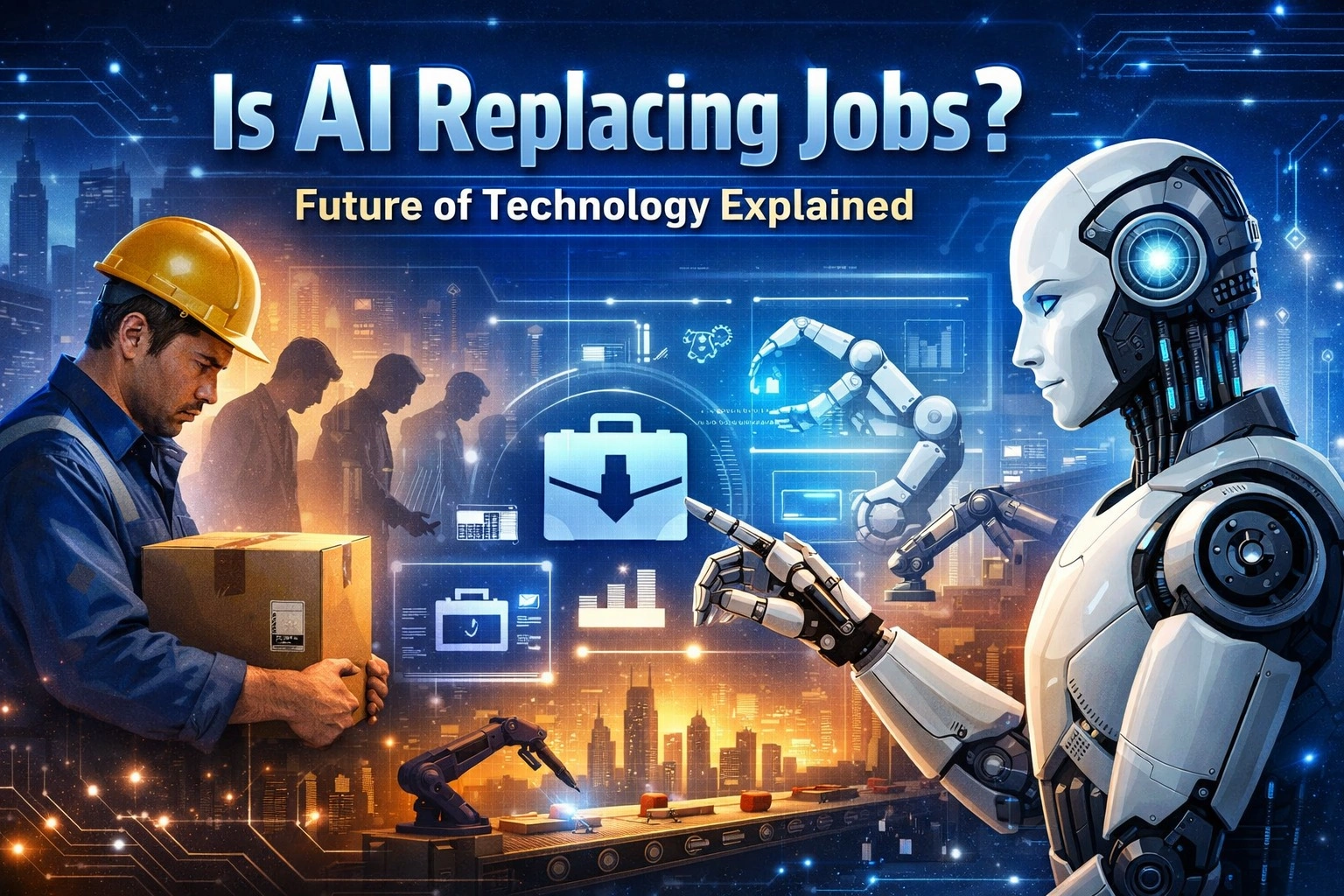
Artificial Intelligence (AI) has been transforming industries at an unprecedented pace. From automating repetitive tasks to creating advanced analytical tools, AI is redefining the way we work. This rapid change has sparked a debate: is AI replacing jobs, or is it creating new opportunities for human workers? In this article, we’ll explore the impact of AI on employment, the sectors most affected, and the future of technology in the workforce.
Understanding AI and Its Capabilities
AI refers to machines and software capable of performing tasks that typically require human intelligence. This includes decision-making, language understanding, pattern recognition, and even creativity in certain areas. Modern AI applications span multiple domains: customer service chatbots, predictive analytics in finance, autonomous vehicles, and healthcare diagnostics, to name a few.
The key to understanding AI’s impact on jobs is recognizing that AI excels in tasks that are repetitive, rule-based, or require analyzing large amounts of data quickly. This makes certain job roles more vulnerable to automation, while creating opportunities in others.
Jobs at Risk of AI Automation
Several sectors are seeing a significant shift due to AI. Roles that involve routine tasks are particularly susceptible. Examples include:
- Manufacturing Jobs: Robots and AI-driven machines can perform assembly line tasks more efficiently and with fewer errors than humans.
- Data Entry and Administrative Roles: AI software can process, sort, and analyze data at incredible speeds, reducing the need for human clerks.
- Customer Service: AI chatbots and virtual assistants can handle common queries 24/7, reducing the demand for human agents.
- Transportation: Autonomous vehicles may replace some driving jobs in logistics and delivery services in the coming years.
However, it’s important to note that AI is not fully replacing all these jobs immediately. Instead, it is changing the way they are performed, often requiring humans to manage, oversee, and collaborate with AI systems.
Jobs AI Cannot Replace Easily
While AI is powerful, it struggles with tasks requiring human creativity, emotional intelligence, complex decision-making, and empathy. Examples include:
- Healthcare professionals providing patient care and making nuanced decisions.
- Teachers and trainers adapting lessons to individual student needs.
- Creative roles such as writers, designers, and artists, where original thinking is key.
- Leadership and strategic management positions requiring judgment, ethics, and interpersonal skills.
This indicates that AI is not a universal threat but rather a tool that reshapes job roles.
How AI is Creating New Opportunities
Despite concerns about job loss, AI is also generating new career opportunities. As organizations adopt AI technologies, there is a growing demand for professionals who can design, maintain, and improve these systems. Some emerging roles include:
- AI and Machine Learning Engineers
- Data Scientists and Analysts
- Robotics Technicians
- AI Ethics and Policy Specialists
Additionally, AI can free employees from repetitive tasks, allowing them to focus on higher-level work, problem-solving, and innovation. This shift can lead to increased productivity, job satisfaction, and business growth.
The Future of Work with AI
The future workplace will likely be a blend of humans and AI, working together in synergy. Automation will handle repetitive tasks, while humans will focus on strategic thinking, creativity, and interpersonal communication. To thrive in this AI-driven era, workers will need to:
- Upskill Continuously: Learning new technologies, programming, and data analysis can make workers more adaptable.
- Focus on Soft Skills: Creativity, empathy, critical thinking, and communication skills will remain highly valuable.
- Embrace Lifelong Learning: The pace of technological change requires a mindset geared toward continuous education and adaptation.
Organizations will also need to invest in retraining programs and foster a culture where humans and AI collaborate effectively.
Balancing Automation and Employment
AI’s influence on jobs is undeniable, but the key lies in balance. Governments, businesses, and educational institutions must proactively manage the transition. Policies that support workforce reskilling, job transition programs, and ethical AI use can ensure that AI benefits society without causing massive unemployment.
For instance, countries investing in technology education and AI literacy are better prepared for the shift. Similarly, companies that view AI as a partner rather than a replacement often achieve higher efficiency while retaining valuable human talent.
Conclusion
AI is not here to replace humans entirely but to augment our capabilities. While certain jobs may be automated, AI also creates new roles and opportunities for growth. The future of work will be shaped by collaboration between humans and AI, emphasizing creativity, problem-solving, and adaptability. By embracing technology, upskilling, and lifelong learning, we can prepare for a workforce that thrives alongside AI rather than competing against it.
The question isn’t whether AI will replace jobs, but how we will evolve to harness its potential. Those who adapt early, embrace continuous learning, and leverage their uniquely human skills will thrive in this new era of technology.
FAQs
Q1: Will AI take over all jobs in the future?
A1: No, AI is unlikely to replace all jobs. It mainly automates repetitive and data-driven tasks, while roles requiring creativity, empathy, and critical thinking remain human-driven.
Q2: Which jobs are most at risk due to AI?
A2: Jobs involving routine tasks, such as data entry, manufacturing, customer service, and certain transportation roles, are most susceptible to automation.
Q3: Can AI create new jobs?
A3: Yes, AI is creating new roles in engineering, data science, robotics, AI ethics, and system maintenance, among others.
Q4: How can workers prepare for an AI-driven future?
A4: Workers should focus on upskilling, learning AI-related tools, improving soft skills, and embracing lifelong learning to remain competitive.
Q5: Is AI a threat or an opportunity?
A5: AI is both a challenge and an opportunity. It can replace repetitive tasks but also enhances productivity, creates new roles, and allows humans to focus on higher-value work.